Mixed Metal Jewelry, Worn With Intent
Mixed metal jewelry used to be the thing you apologised for. Somewhere between a grandmother's rule and a magazine's edict, warm and cool gold were declared incompatible, and a generation learned to empty one wrist before dressing the other.
That rule has quietly collapsed. Mixing metals is now a stated trend rather than a tolerated accident, and the shift is visible in what people actually buy. Judit Kovacs, an online merchandiser interviewed by Woman & Home for its 2026 jewellery trend report, put it plainly: "Mixing metals is definitely on the rise this year and is becoming a trend in its own right." The same report lists mixed metals alongside layering and stacking as the year's defining habits, which is the real story. People are not choosing a metal any more. They are building a collection, one piece at a time, and a collection assembled over years is never going to be monochrome.
Those numbers describe a market where gold itself has become the main character. The Knot's 2026 Real Weddings Study, reported by JCK, found 39% of couples choosing yellow gold, a 140% rise over five years. Meanwhile the World Gold Council recorded global gold demand of 1,313 metric tons in a single quarter, the highest on record, with spot gold hitting a record $4,381 an ounce, according to Reuters coverage of the Council's report. When gold is this valuable and this desired, replacing a perfectly good white gold piece to match a new yellow one stops making any sense at all.
Why Mixed Metal Jewelry Stopped Being a Mistake
Mixed metal jewelry reads as deliberate when the pieces look collected rather than compromised, and that distinction is entirely about repetition. A single stray silver ring among five yellow gold ones looks like an oversight. Three cool-toned pieces distributed across a hand and wrist look like a decision.
The styling logic behind it is the same one driving the broader layering trend. Amanda Gizzi of Jewelers of America told National Jeweler that layering remains firmly in favour and translates especially well to gifting, because each new piece joins something already owned rather than replacing it. A layered wardrobe is additive by nature. Insisting it stay in one metal means every future purchase is constrained by a choice made years ago.
There is a practical argument too. Most people already wear at least two metals without noticing: a white gold engagement ring, a yellow gold chain inherited from a parent, a steel watch. The question was never whether to mix. It was whether to do it with intention.
Three Rules for Mixing Metals Well
Mixing metals successfully comes down to three decisions, made in order: pick an anchor, repeat the secondary tone at least twice, and keep the finish consistent across the stack.
- Anchor with one dominant metal. Roughly two thirds of what you are wearing should sit in a single tone. That tone is the backbone, and everything else reads as accent rather than accident.
- Repeat the second tone, never strand it. One off-tone piece looks forgotten. Two or three, spread across different body points (a ring, an ear, a wrist), look composed.
- Match the finish, not the colour. High polish next to high polish holds together even across metals. Polished gold beside brushed gold fights, even when both are yellow.
- Work in odd numbers. Three bracelets read better than two or four. The eye reads odd groupings as arranged and even ones as paired.
If you are building from a rose gold base, our take on where rose gold sits in 2026 covers how it behaves alongside both warm and cool tones.
Which Metal Pairings Actually Work
Every two-metal combination works, but each produces a different temperature and asks for a different anchor. The table below sets out how each pairing behaves and what to lead with.
| Pairing | Temperature | Anchor with | Reads as |
|---|---|---|---|
| Yellow + white | Warm core, cool edge | The widest yellow piece | Classic and considered. The safest entry point. |
| Yellow + rose | Entirely warm | Yellow at the centre | Soft and tonal. Flatters warm skin, reads almost monochrome at a distance. |
| White + rose | Cool core, warm edge | White, with rose as the smallest piece | Modern and slightly austere. The most fashion-forward of the three. |
| All three | Full spectrum | Whichever you own most of | Collected over time. Needs one repeated finish to hold together. |
Building a Mixed Metal Stack That Lasts
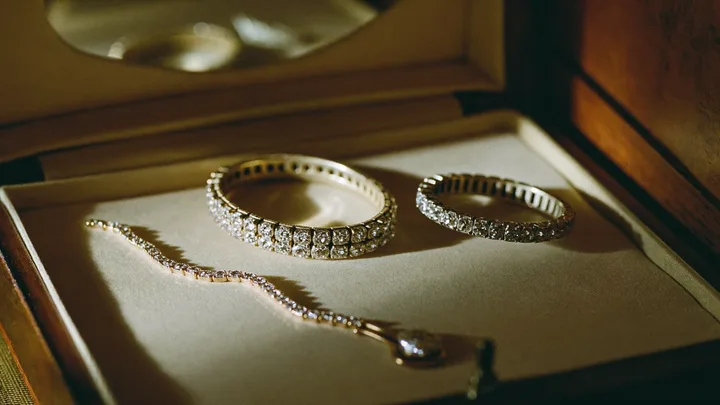
The pieces that survive a mixed stack are the ones with enough structure to hold their own tone, which usually means solid gold and set stones rather than plating and flat surfaces. Diamonds help considerably here: white stones act as a neutral bridge between warm and cool metals, which is why a diamond line piece can sit between yellow and white gold without either tone looking stranded.
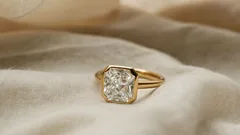
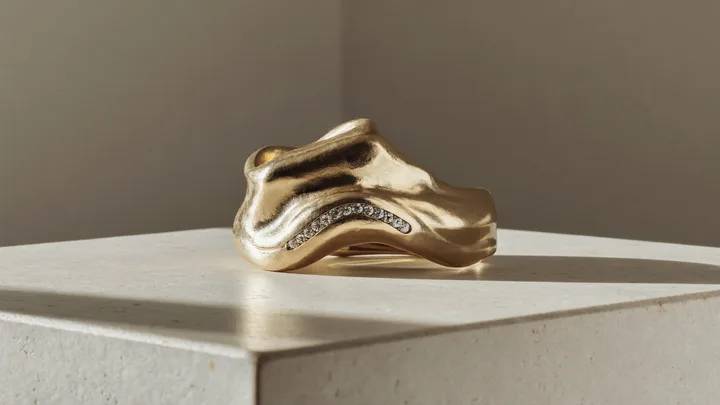
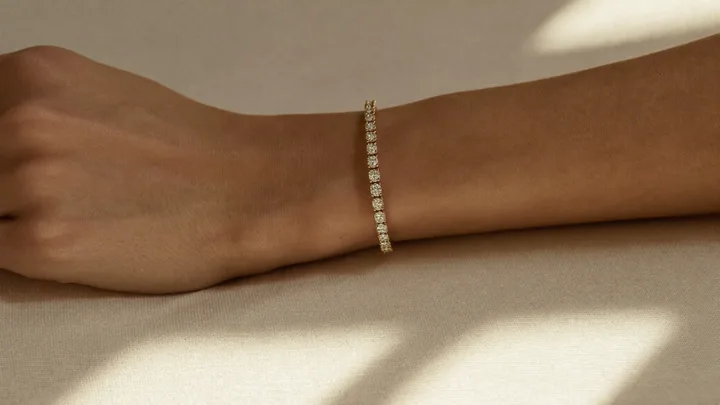
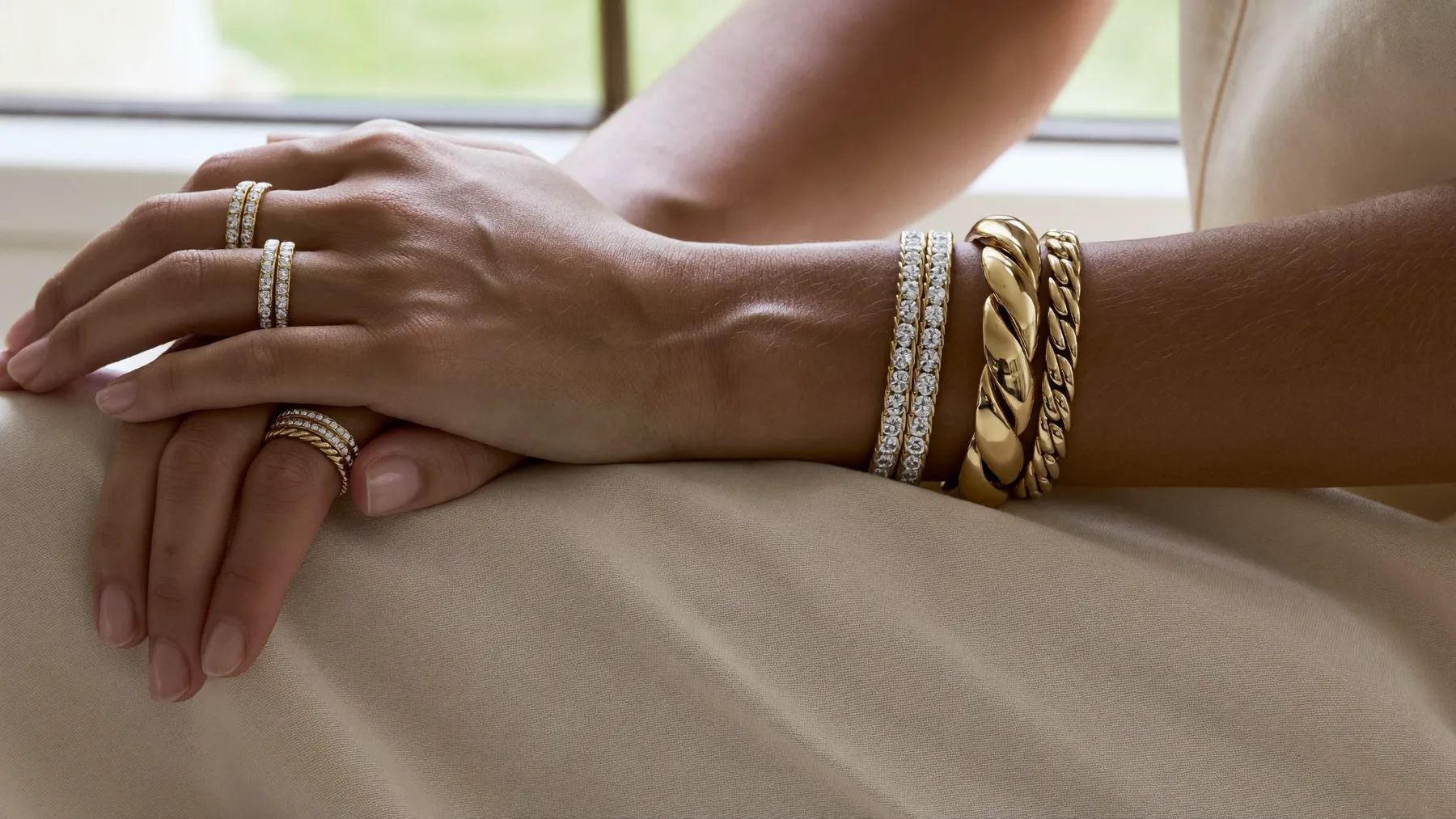
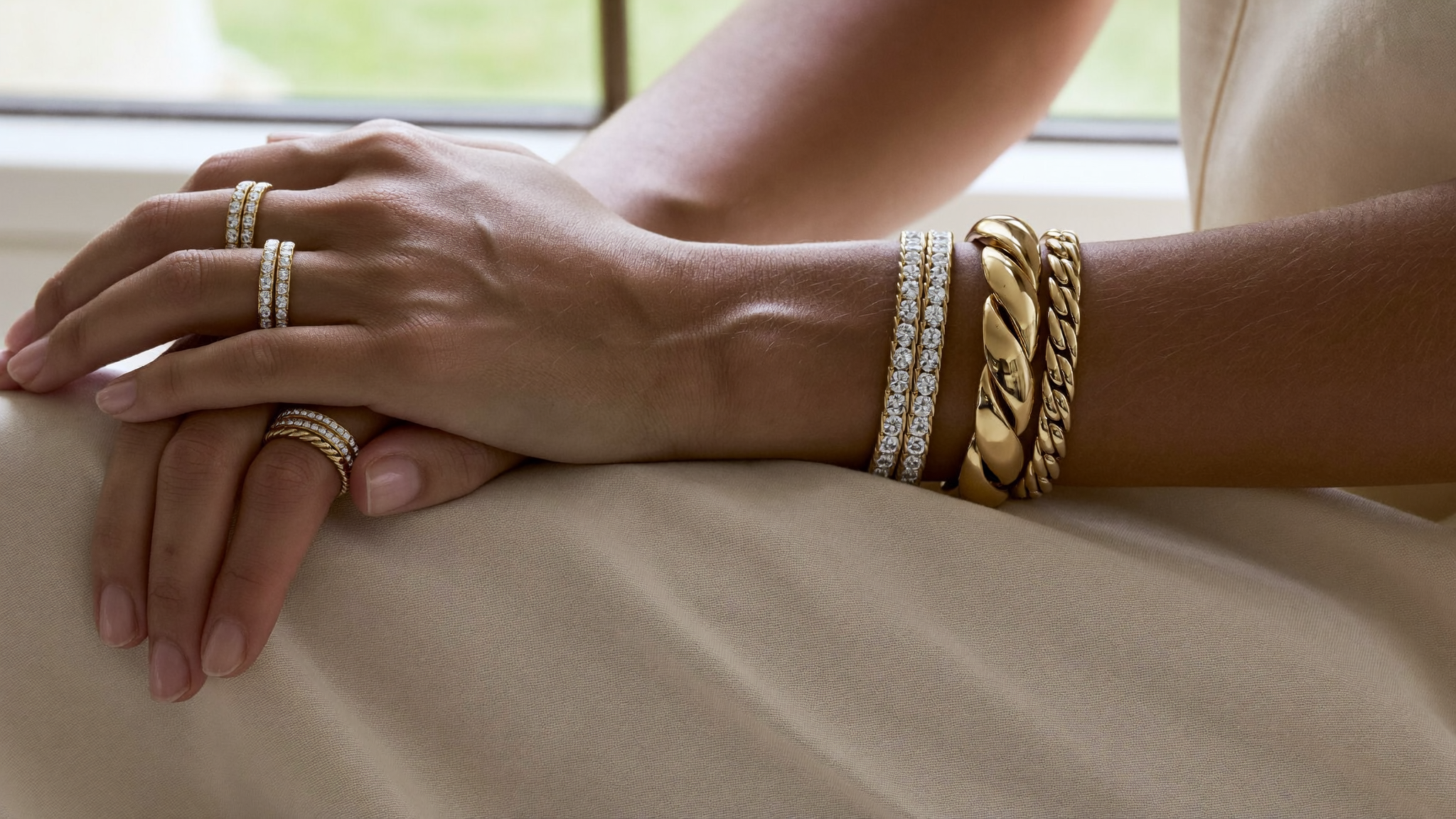
Start at the wrist, where mixing is most visible and most forgiving. The Aurore Round Diamond Tennis Bracelet (from $1,450) runs 0.65 carats of round brilliants in an unbroken line, which gives any stack a white-stone spine to build warm and cool gold around. On the hand, keep the shapes varied rather than the metals matched: the Arc Diamond Band Ring (from $600) brings a flush-set curve, while the Tendril Diamond Vine Ring (from $400) twists in a different direction entirely. Worn in two different golds, they read as a collection rather than a set.
At the ear, mixing is easiest of all, because the two sides are rarely seen together. The Serena Wave Diamond Hoop Earrings (from $600) carry an open wave silhouette that holds shape against any tone, and the Velmira Diamond Hoop Earrings (from $550) cluster diamonds into botanical curves that bridge warm and cool. For a genuinely asymmetric ear, the Blossom Grace Mismatched Diamond Earrings (from $350) are designed to be unalike from the outset. If you are adding studs underneath a mixed stack, our guide to diamond stud earring size explains how much lobe each carat weight actually occupies. Every piece is available in yellow, white and rose gold in solid 10, 14 and 18kt, with IGI and Roomy's certified lab-grown diamonds, which means a single design can anchor two tones at once.
Where Mixing Goes Wrong
The most common mixed metal failure is scale, not colour. Three delicate chains in three different tones read as clutter, because nothing is large enough to anchor the group. One substantial piece paired with two fine ones in another metal reads as styling. If a stack is not working, the fix is almost never to remove a metal. It is to add weight to one of them, or to take one thin piece away. Our guide to stacking bracelets covers the proportional maths in detail.
The second failure is treating mixing as a licence to stop editing. A mixed stack still has a limit, and that limit is usually three to five pieces per body point. Beyond that, the eye stops reading individual objects and starts reading noise.
Frequently Asked Questions
Can you wear gold and silver jewelry together?
How do you mix metals without looking mismatched?
Does mixed metal jewelry work with an engagement ring in a different metal?
Is mixed metal jewelry still in style in 2026?
One design, every tone of gold
Each piece is made to order in solid 10, 14 or 18kt yellow, white or rose gold, set with IGI-certified lab-grown diamonds.
Shop the Collection