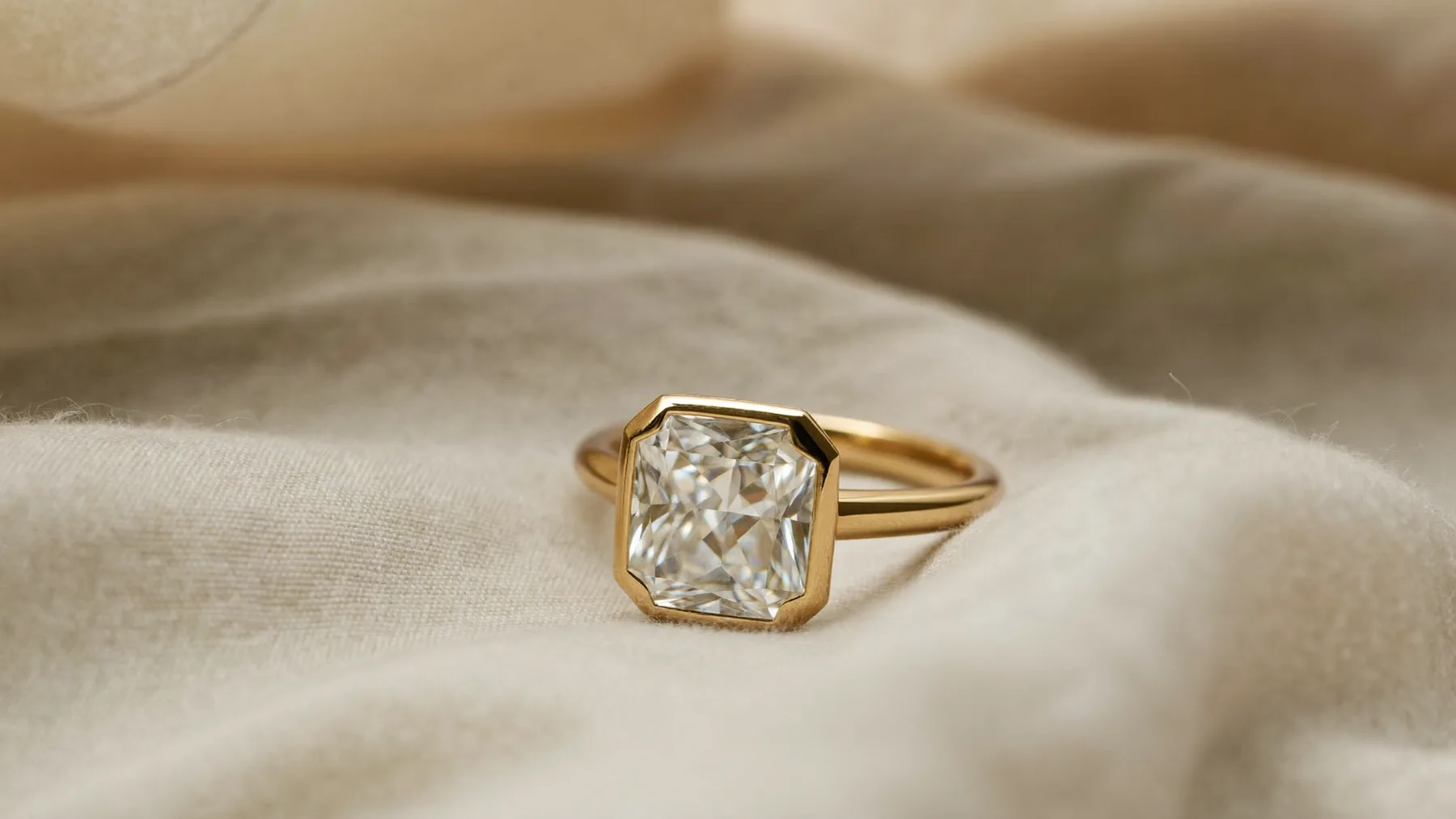
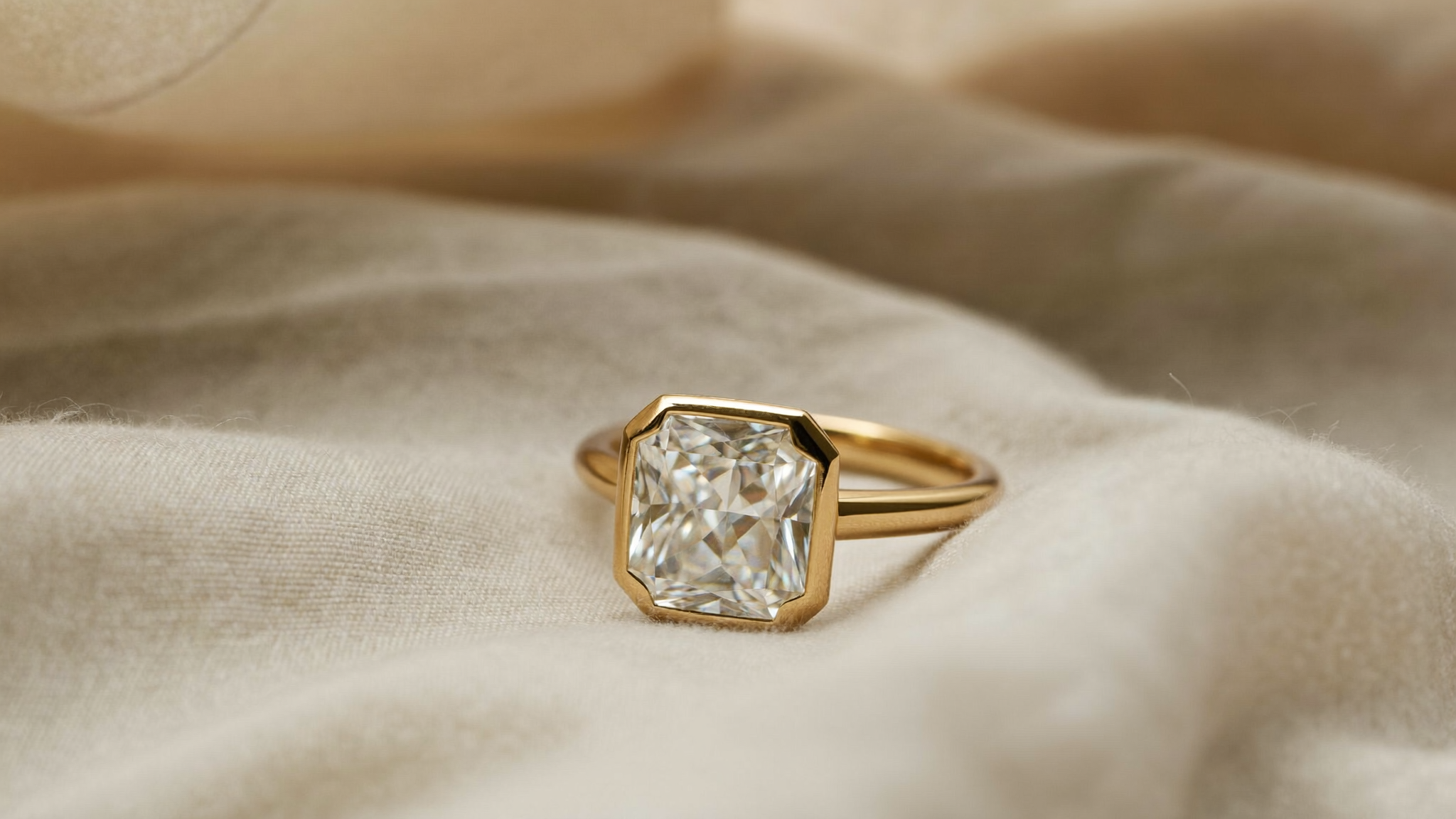
Cushion Cut Diamonds: Soft Corners, Old Soul
Cushion cut diamonds are the shape buyers return to when they want a stone that looks handmade rather than engineered. Softened corners, curved sides, a wide open face: this is the cut that reads antique even when the diamond was grown last year.
The timing is not accidental. Vintage-leaning shapes are pulling attention back from the decade-long run of ovals and rounds, and JCK's review of jewelry retail heading into 2026 credits renewed interest in warmer hues and vintage cuts partly to high-profile old mine-cut engagement rings. The cushion sits exactly there: the modern, wearable descendant of the old mine cut, available today in IGI certified lab grown stones at a fraction of what the shape used to cost.
Those three numbers frame the whole decision. The Knot's 2026 engagement ring study, reported by National Jeweler, puts cushions (including old mine and elongated cushions) at 6% of US engagement rings, tied with radiant and well behind round at 26% and oval at 25%. Only Natural Diamonds, the editorial arm of the Natural Diamond Council, notes that today's cushions typically carry 64 to 77 facets, far more refined than their ancestors. And GIA traces the old mine cut to the 1700s, when slow hand cutting pushed cutters to preserve as much weight from the rough as possible.
What a Cushion Cut Diamond Actually Is
A cushion cut diamond is a brilliant-faceted stone with a square or squarish-rectangular outline, curved sides, and rounded or gently pointed corners, named for its resemblance to a pillow. GIA describes the modern version as carrying "four or eight mains, which are kite-shaped facets between the girdle and the culet," with some designs adding extra crown or pavilion facets and taking the name modified cushion brilliant.
What that means in practice:
- It is a brilliant cut, not a step cut. The faceting scatters light into broad flashes rather than the long mirror-like planes of an emerald cut.
- The corners are its structural advantage. No sharp points to protect, which is why cushions survive daily wear better than princess or marquise shapes.
- The outline is not standardised. Two stones can both be graded "cushion" and look nothing alike, which makes the measurements on the report more important than the shape name.
- Symmetry is the quality tell. GIA advises that the sides and corners should curve to mirror each other, or the stone reads lopsided on the hand.
Cushion Cut vs Round Brilliant: The Honest Tradeoff
A round brilliant will out-sparkle a cushion of equal quality, and a cushion will give you more visible character and a lower price per carat. GIA is unusually direct about the first half of that: "Don't expect the sparkle of a round brilliant cut or princess cut diamond," the institute writes, before adding the line that explains why people still choose the shape. "Cushion cuts have a different pattern of sparkle, but are no less beautiful."
| Shape | Faceting | Light Character | Best For |
|---|---|---|---|
| Cushion | Brilliant, 64 to 77 facets | Broad, soft, candlelit flashes | Vintage-leaning looks, daily wear, bezel and halo settings |
| Round brilliant | Brilliant, 57 or 58 facets | Maximum, rapid-fire scintillation | Buyers who want the most sparkle per carat and the safest resale |
| Emerald | Step cut | Long mirrored planes, "hall of mirrors" | Art Deco geometry, elongating the finger, showing off clarity |
If you want to go deeper on how sparkle is actually measured and graded, our guide to diamond cut grades explains what Excellent and Ideal really describe. For the step-cut alternative, read the emerald cut edit.
Square or Elongated: Reading Length to Width Ratios
The length to width ratio decides whether a cushion reads as a chunky square or a long, finger-slimming rectangle, and it matters more than carat weight to how the stone looks on a hand. Ratios near 1.00 to 1.05 give the classic pillow. Only Natural Diamonds defines the elongated cushion as having a ratio greater than 1.1 to 1, places the usual pleasing range between 1.1 and 1.3, and calls 1.15 to 1.25 the sweet spot where the shape keeps its cushion softness while clearly reading long. For a more architectural, almost radiant-like outline, the same source notes ratios of 1.4 to 1.5 are becoming a modern favourite.
At Roomy's, every cushion is an IGI certified lab grown stone with its measurements printed on the report. A 1.03ct cushion in D VVS1 (from $109) is the entry point for a classic one-carat look, a 2.02ct cushion in D VS2 (from $208) sits where most engagement ring buyers land, and a 5.04ct cushion in D Internally Flawless (from $4,221) is the statement end of the range.
Setting a Cushion Cut Diamond Without Risking the Girdle
Bezel and halo settings are the safest homes for a cushion, because the shape's one real vulnerability is its girdle. GIA notes that a cushion's girdle is usually thicker at the corners than between them, and that thin girdles can chip, which is why the institute suggests a bezel to protect the perimeter. A metal rim does the protective work and, conveniently, suits the antique mood the shape is already carrying.
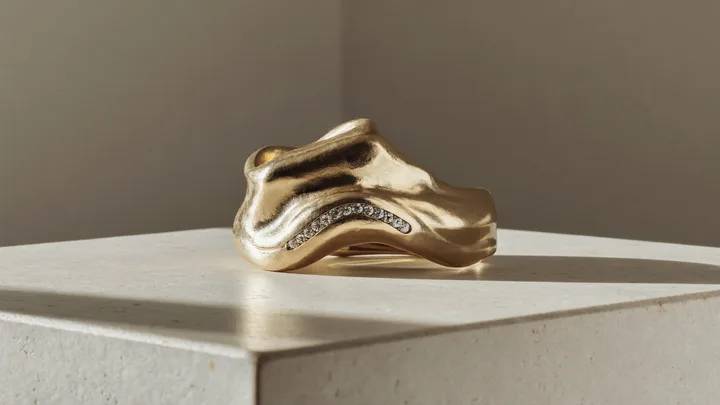
Roomy's builds its settings in solid 10kt, 14kt and 18kt gold with handcraft rather than cast-and-ship uniformity. The Reverie Diamond Sculptural Ring (from $1,050) shows the bezel approach in a fluid sculptural setting, and the Prism Emerald Eternity Band (from $1,050) is the bezel-set band most cushion buyers end up stacking alongside. If settings are the part you are least sure about, our ring settings buyer's guide walks through prongs, bezels, channels and pavé side by side. And because the cushion is the shape most often bought with the long term in mind, it is worth reading alongside our guide to heirloom jewelry worth passing down, which covers which pieces actually survive generations.
Frequently Asked Questions
Is a cushion cut diamond cheaper than a round brilliant?
Does a cushion cut diamond sparkle less than a round?
What is the best length to width ratio for a cushion cut diamond?
Do cushion cut diamonds chip easily?
The Shape That Ages Forward
IGI certified lab grown diamonds, set by hand in solid 10kt, 14kt and 18kt gold.
Shop the Collection