Heirloom Jewelry: Built to Outlive the Trend
There is a quiet shift in how people are buying fine jewelry, and it has nothing to do with what is trending. Buyers want fewer pieces, spend more on each, and ask a question that used to belong to estate dealers: will this still be worth wearing in forty years? That is heirloom jewelry thinking, and in 2026 it has gone mainstream.
The economics pushed it there. Gold's spot price rose about 60% over the past year, peaking near $4,400 in late October 2025, according to JCK's review of jewelry retail. Meanwhile McKinsey's ConsumerWise survey of 4,013 US consumers found that 43% expect to spend less on jewelry over the coming three months, as JCK reported. Less volume, more intention. Alexis Padis, president of Padis Jewelry, described the mood to JCK exactly: "We're seeing a 'fewer, better things' mindset, with people buying with intention, not impulse."
The third number is the one that decides whether a piece survives. GIA puts it simply: "A diamond is so hard it ranks as a 10 on the Mohs scale, the highest level of hardness." GIA adds that the scale's intervals are not evenly spaced, so diamond is many times harder than the corundum family that includes ruby and sapphire. Hardness is not a marketing claim. It is the reason a diamond worn daily for fifty years still looks like itself.
What Makes a Piece Heirloom-Grade
An heirloom-grade piece passes four tests: it is made of solid precious metal, it is set with a stone hard enough to survive daily wear, its design reads clearly outside the decade it was made in, and it can be repaired rather than replaced. Most jewelry fails at least one.
- Solid, not plated. Plating wears through at the contact points and cannot be restored without stripping and refinishing the whole piece.
- Hard stone, properly set. Diamond at Mohs 10 handles decades of wear. Softer stones chip, abrade and cloud.
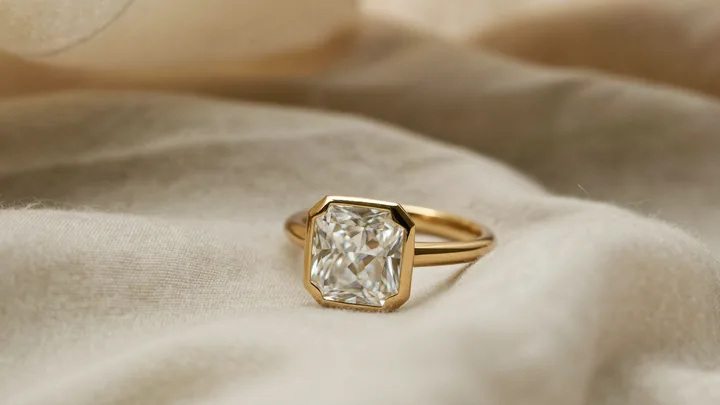
- Design that outlives its decade. A line of diamonds, a plain eternity band and a single pendant stone have all survived a century of taste changes.
- Repairable construction. Prongs can be retipped, clasps replaced, bands resized. Glued or sealed construction cannot.
- Paperwork that travels with it. A certificate and an appraisal are what let the next owner insure it without starting from zero.
The Three Categories That Actually Survive
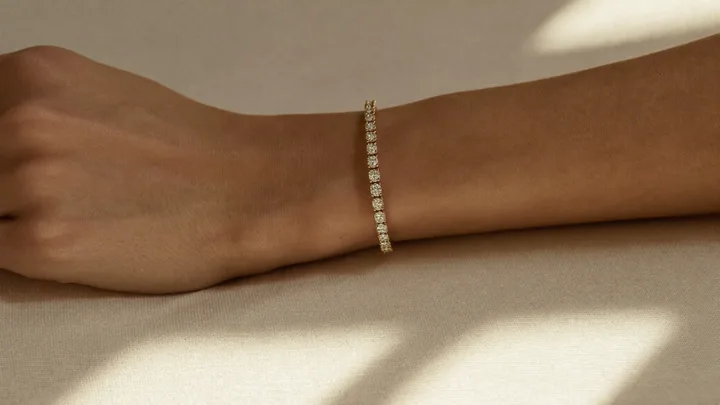
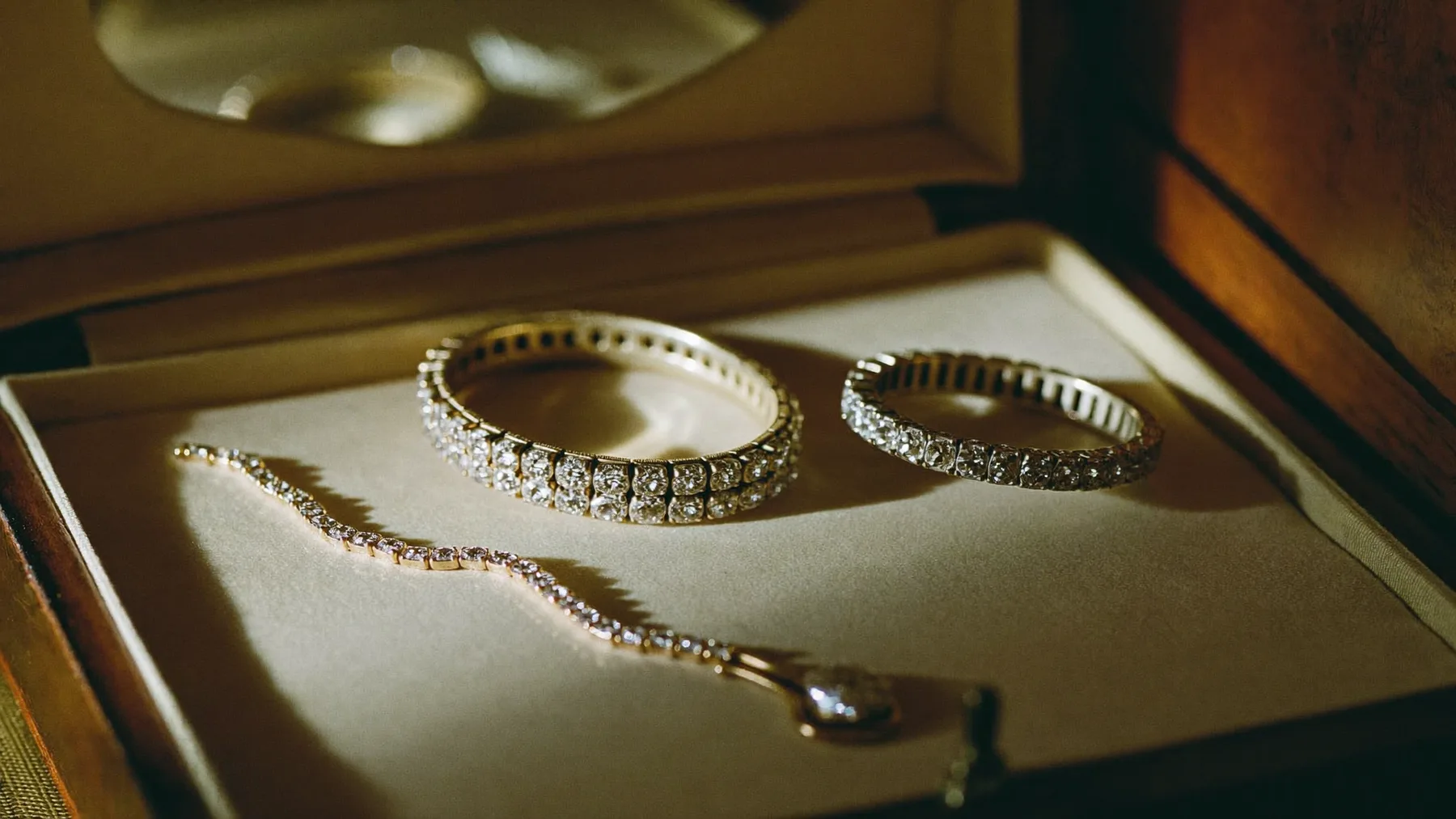
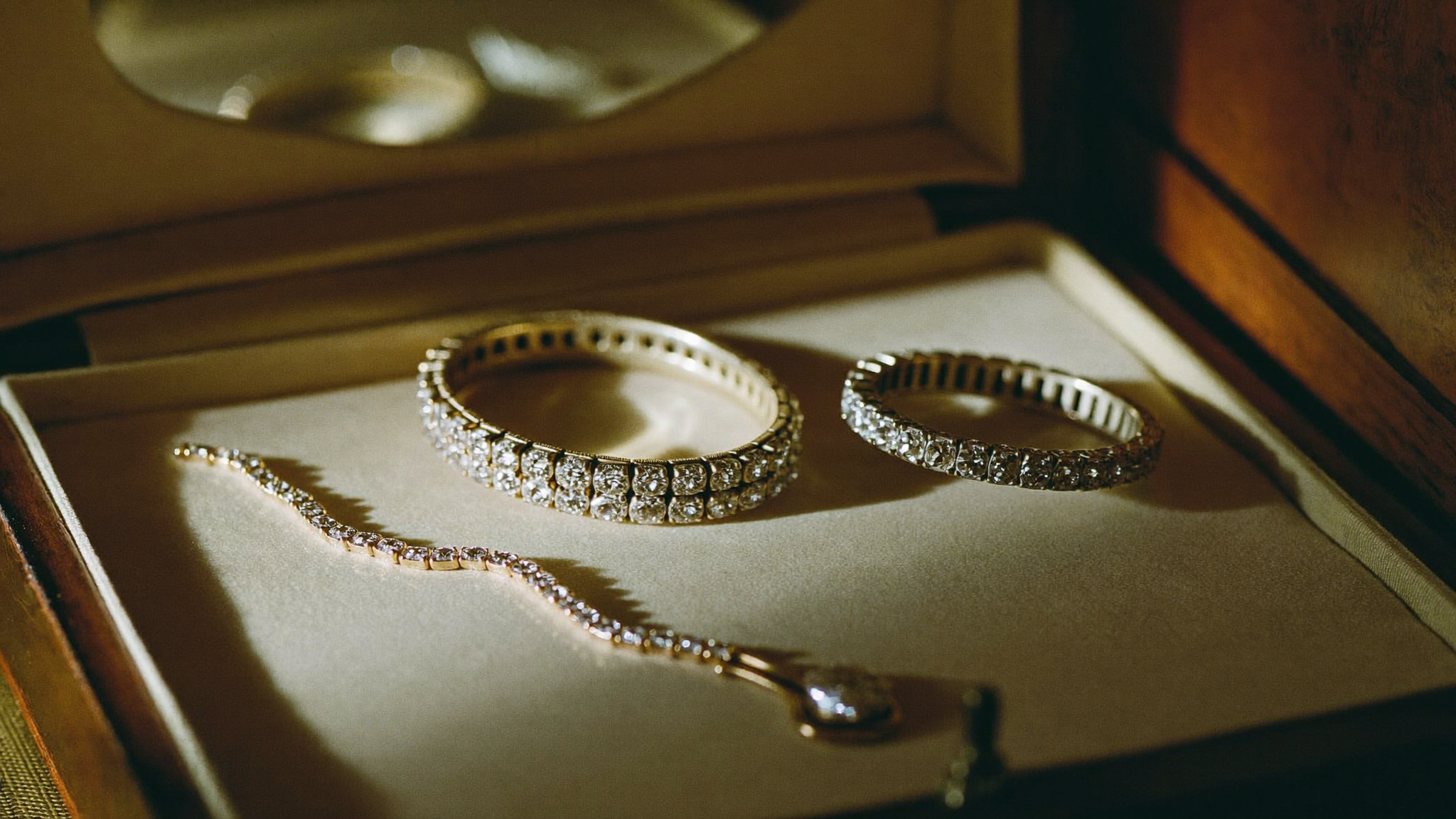
Tennis bracelets, eternity bands and solitaire pendants are the three categories that reliably outlast their first owner, because none of them depends on a trend silhouette, and none becomes unwearable when taste moves on.
| Category | Why It Lasts | Watch For | Roomy's From |
|---|---|---|---|
| Diamond tennis bracelet | A continuous line of diamonds has read as formal and as everyday for nearly a century | Clasp quality and a safety catch, the only parts that fail | $550 |
| Diamond eternity band | No orientation, no top or bottom, nothing to date it | Not resizable once fully set, so size carefully | $1,050 |
| Solitaire diamond pendant | One stone, one bail, nothing to go out of style | Chain gauge: a thin chain is the piece's weak link | $850 |
In practice that means the Opale Round Diamond Tennis Bracelet (from $550) is the honest entry point, while the Prestige Round Diamond Tennis Bracelet (from $5,100) is the high-carat version people actually write into wills. The Windmill Marquise Eternity Band (from $1,950) carries over two carats of marquise diamonds with no beginning and no end. For pendants, the Halo Round Diamond Pendant (from $850) and the Oval Diamond Solitaire Pendant (from $2,000) sit either side of the same idea.
Solid Gold or Nothing: Where Heirloom Durability Is Decided
Heirloom jewelry has to be solid gold, because plated gold wears through at exactly the places a loved piece gets touched most. Roomy's works only in solid 10kt, 14kt and 18kt, and the karat choice is a genuine tradeoff rather than a hierarchy. 10kt is the hardest and most scratch-resistant of the three. 18kt holds the richest colour and the highest intrinsic metal value, which matters more now that gold has run up 60% in a year. 14kt is the compromise most people are happiest with over decades.
The Honest Part: Heirloom Value Is Not Resale Value
An heirloom's value is measured in decades of wear and the meaning attached to it, not in what a dealer would pay tomorrow. This is the part the industry tends to skip. Lab grown diamond prices have fallen steadily, and anyone buying a lab grown stone as a financial instrument is buying the wrong thing. What a lab grown diamond does deliver is the identical material: the same carbon, the same Mohs 10 hardness, the same behaviour under fifty years of wear, at a size and quality most buyers could not otherwise reach.
The market has already decided this question. The Knot's 2026 study, reported by National Jeweler, puts lab grown diamonds in 61% of US engagement rings. Those rings are already becoming the heirlooms of the 2060s. If you are choosing a shape with that timeline in mind, our buyer's guide to cushion cut diamonds covers the antique-leaning cut that has aged better than almost any other. And once a piece is in the family, our guide to insuring a diamond ring explains how to keep it protected.
Frequently Asked Questions
Can lab grown diamond jewelry be passed down as an heirloom?
What karat gold is best for heirloom jewelry?
How much should you spend on an heirloom piece?
Does heirloom jewelry need to be insured separately?
Buy Once. Hand It On.
Solid 10kt, 14kt and 18kt gold set with IGI certified lab grown diamonds, finished by hand.
Shop the Collection