Gold Hallmarks: What the Numbers Mean
Somewhere on every real piece of gold jewelry you own there is a number too small to read without good light. It might say 585, or 14K, or nothing at all. Gold hallmarks are the only part of a piece that cannot flatter you, and with gold trading near record highs they have never been worth more attention.
Most people never look. That is understandable, because the mark is usually hidden inside a ring shank or on the tongue of a clasp, and because nobody explains what the three digits are counting. They are counting purity, in parts per thousand, and once you know that the whole system opens up in about ninety seconds.
What Gold Hallmarks Actually Mean
A gold hallmark is a stamped mark that states how much pure gold a piece contains, expressed either in karats out of 24 or as a three-digit fineness number out of 1,000.
The two systems describe the same thing. The Federal Trade Commission explains the karat side plainly: pure gold is 24K and is soft, so it is mixed with other metals, which means an 18K piece is "18 parts gold mixed with six parts of another metal." Divide 18 by 24 and you get 0.750, which is where the stamp 750 comes from. Fourteen parts gold out of 24 gives 0.585, stamped 585. Ten parts gives 0.4167, stamped 417.
| Stamp | Karat | Pure gold | What it means on the hand |
|---|---|---|---|
| 417 | 10kt | 41.7% | Hardest and most scratch resistant, palest colour, lowest metal cost |
| 585 | 14kt | 58.5% | The everyday balance of warmth and durability |
| 750 | 18kt | 75% | Richest colour, softer surface, highest metal cost |
| 999 | 24kt | 99.9% | Too soft to hold a diamond or survive daily wear |
417, 585 and 750: Reading the Number Inside Your Ring
You will find the mark on the flat inner surface of a ring shank, on the tongue or plate of a bracelet clasp, on the back of a pendant bail, or on the post of an earring. It is rarely more than a millimetre tall, so a loupe or a phone camera at maximum zoom usually does the job better than your eyes.
- Rings. Inside the shank, almost always on the underside opposite the setting.
- Bracelets and necklaces. On the clasp itself, or on a small flat tag soldered beside it.
- Pendants. On the bail, or on the reverse of the setting near the edge.
- Earrings. On the post, or on the back of the butterfly, which is why one earring may be marked and the other not.
One honest note about US jewelry. American pieces frequently carry the karat form (10K, 14K, 18K) rather than the European fineness form (417, 585, 750), and both are legitimate. Seeing 14K rather than 585 tells you nothing bad. Seeing neither is the problem.
The Mark That Matters More Than the Karat
A karat stamp on its own is not enough, because a number can be stamped by anyone, while a registered trademark attaches a company's legal liability to it. The FTC is unusually direct about this. Its guidance tells buyers to look for "the name or the U.S. registered trademark of the company that will stand behind the mark" near the karat quality mark, and then says: "If you're thinking about buying a piece of gold jewelry but don't see a trademark along with the karat mark, don't buy it."
That is the single most useful sentence in gold buying, and it costs nothing to apply. A maker's mark beside the fineness number means someone is accountable for the claim. Every solid gold piece Roomy's makes is stamped for karat and accompanied by IGI certification for the diamonds, so the metal claim and the stone claim are both traceable to a named party rather than to a stamp alone.
Solid Gold vs Plated: What the Stamp Tells You
A plated piece is required to say so in its mark, and the wording tells you how much gold is actually there. The FTC defines gold filled, gold overlay and rolled gold plate (RGP) as "a layer of at least 10 karat gold mechanically applied to a base metal," marked with both the karat and the term, as in 12K RGP. Where the gold layer is less than one twentieth of the item's weight, the mark must state the fraction, such as 1/40 14K gold overlay. Gold electroplate carries at least 10 karat gold at least 0.175 microns thick. Gold flashed and gold washed describe thinner coatings that wear away faster.
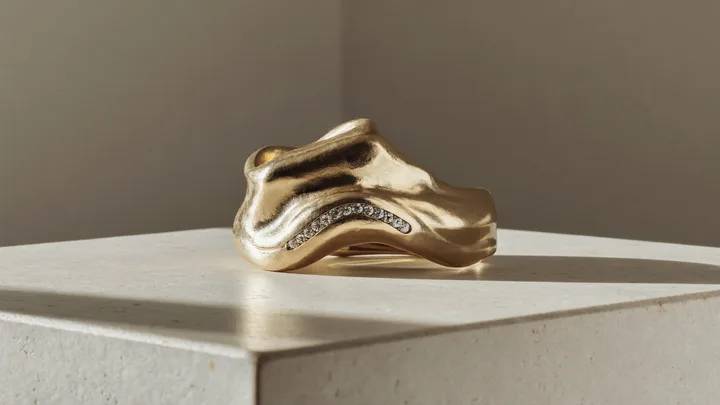
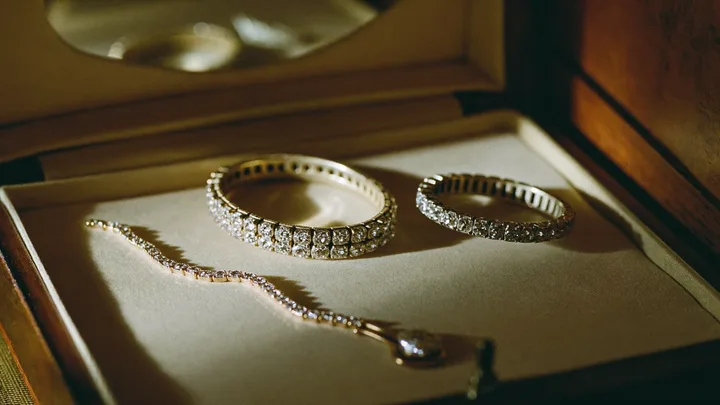
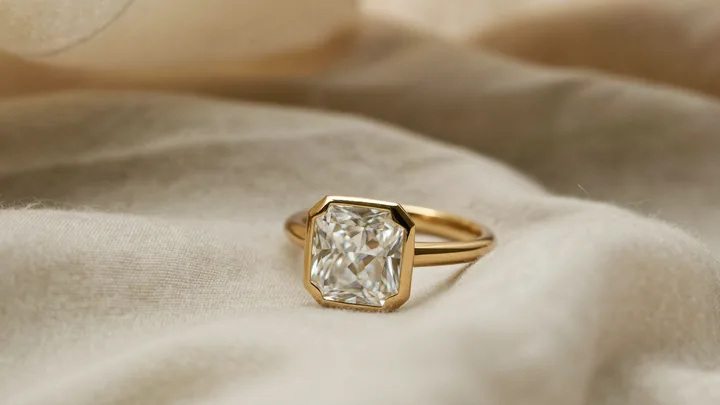
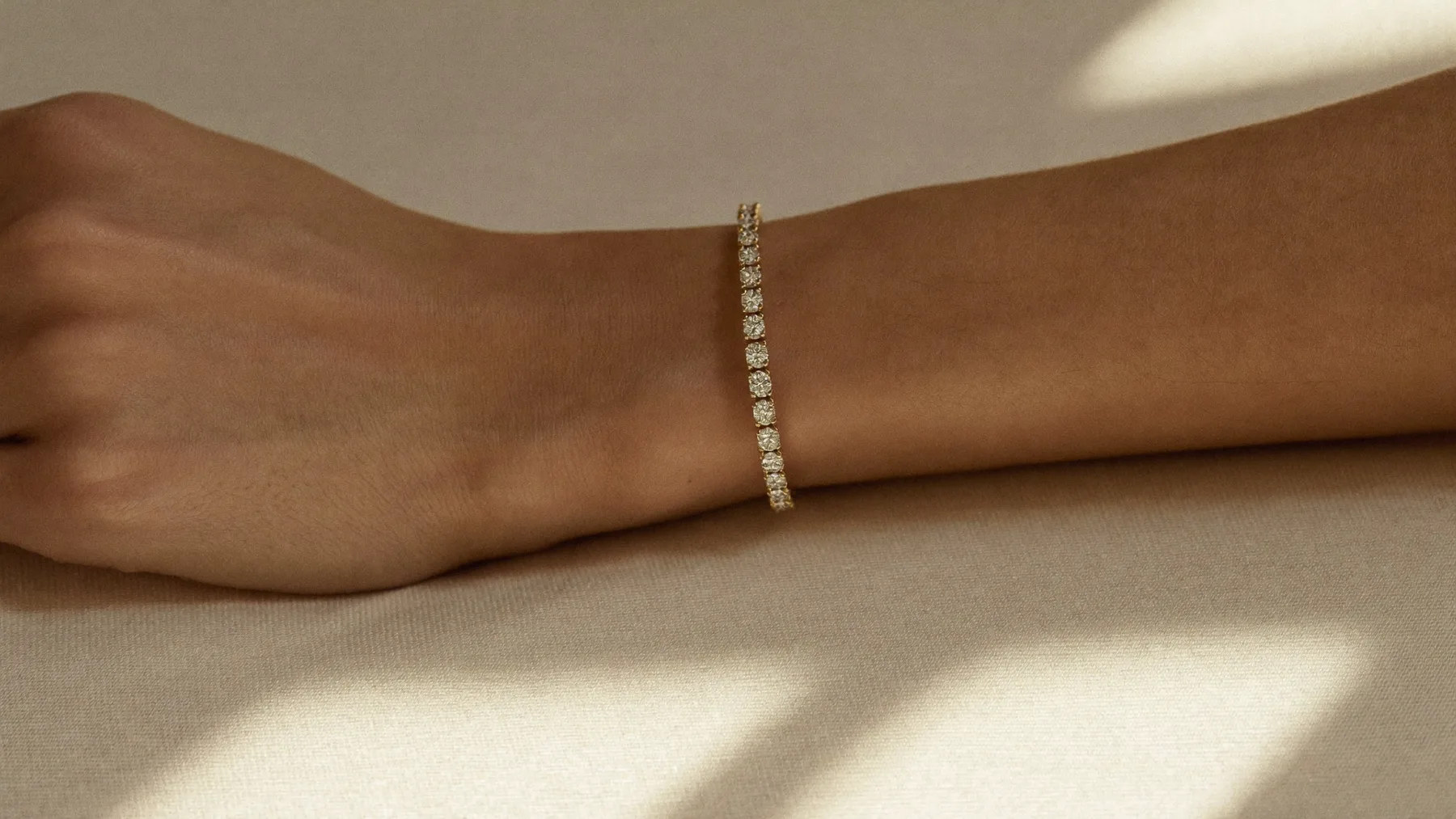
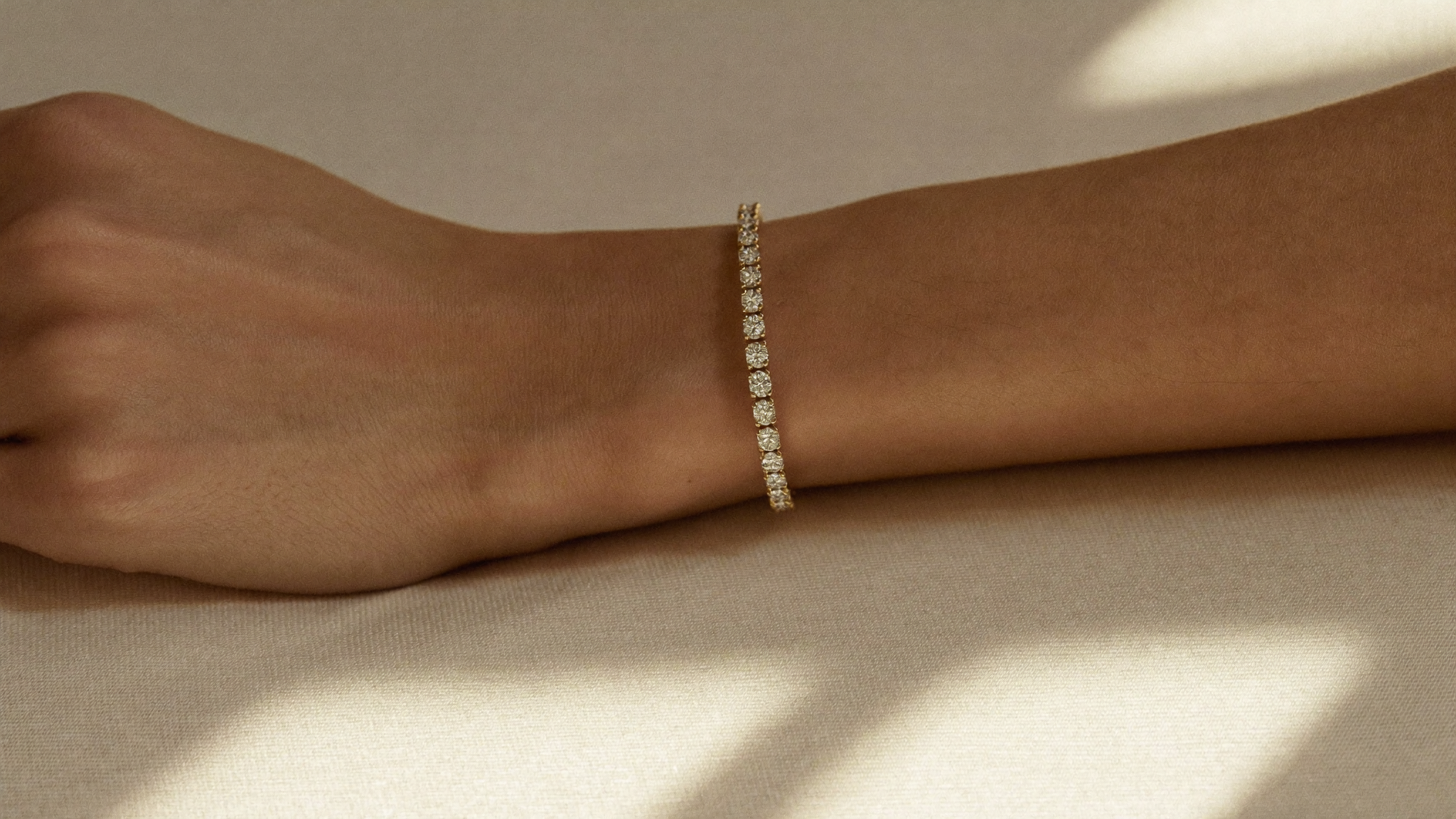
Roomy's sells both, and labels both. The solid gold pieces are offered in 10, 14 and 18kt: the Arc Diamond Band Ring (from $600), the Linear Diamond Half Eternity Band (from $700), the Opale Round Diamond Tennis Bracelet (from $550) and the Aurore Round Diamond Tennis Bracelet (from $1,450). The Everyday Edit is separate and plated, like the Stardust Cuff (from $66.50) in 18K gold plate over stainless steel. Both have a place. The point is that the mark should tell you which one you are holding before the price does.
The stakes have risen sharply. National Jeweler reports gold moved from about $2,625 an ounce in 2025 to a 2026 peak near $5,340, roughly doubling. In the same publication's analysis of jewelry demand, World Gold Council figures show gold's 2025 annual average reached $3,431 an ounce, up 44% year over year and the highest on record. When the metal is that expensive, the difference between 585 and a thin plating is a large amount of money.
If you are deciding between karats rather than decoding a stamp you already own, our 10k vs 14k vs 18k karat guide compares colour, hardness and cost directly, and our guide to solid gold vs gold plated covers how each one ages over years of wear. And if the piece you are weighing up is a heavier, more designed one, our sculptural rings edit explains why 2026's best gold work competes on form rather than weight.
Frequently Asked Questions
What does 585 mean on gold?
Is gold without a hallmark real?
Which gold karat is best for everyday jewelry?
Does a hallmark tell you if diamonds are real?
Marked, certified, and made to be checked.
Solid 10, 14 and 18kt gold with lab grown, IGI certified diamonds, from $500.
Shop the Collection