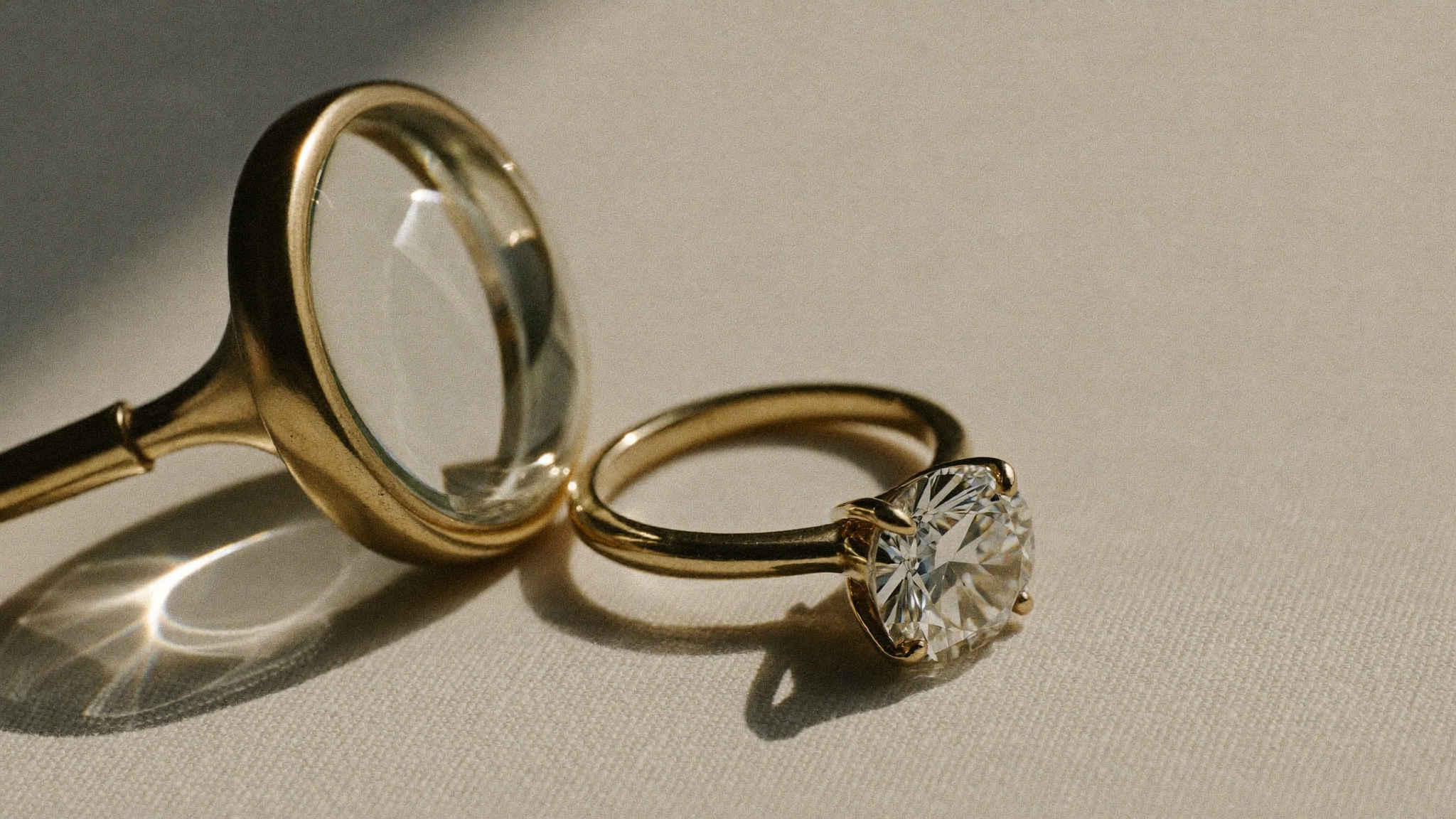
The Diamond Clarity Chart, Read Properly
Every diamond clarity chart shows the same eleven grades in the same neat row, and almost none of them tell you the one thing you came to find out: which grade is actually worth paying for.
Clarity is the quietest of the four Cs and the easiest to overspend on. It describes the tiny crystals, feathers and surface marks a diamond carries from its formation, and it is assessed in conditions almost nobody replicates in real life. Understanding how the scale is built is the difference between buying a grade and buying a stone you can see clearly across a dinner table.
What a Diamond Clarity Chart Actually Measures
A diamond clarity chart ranks how few internal and surface characteristics a diamond shows to a trained grader under 10x magnification. According to the Gemological Institute of America's 4Cs clarity guide, the scale runs across six categories subdivided into eleven grades, from Flawless at the top to I3 at the bottom. Internal and surface reaching features are called inclusions; features confined to the surface are called blemishes.
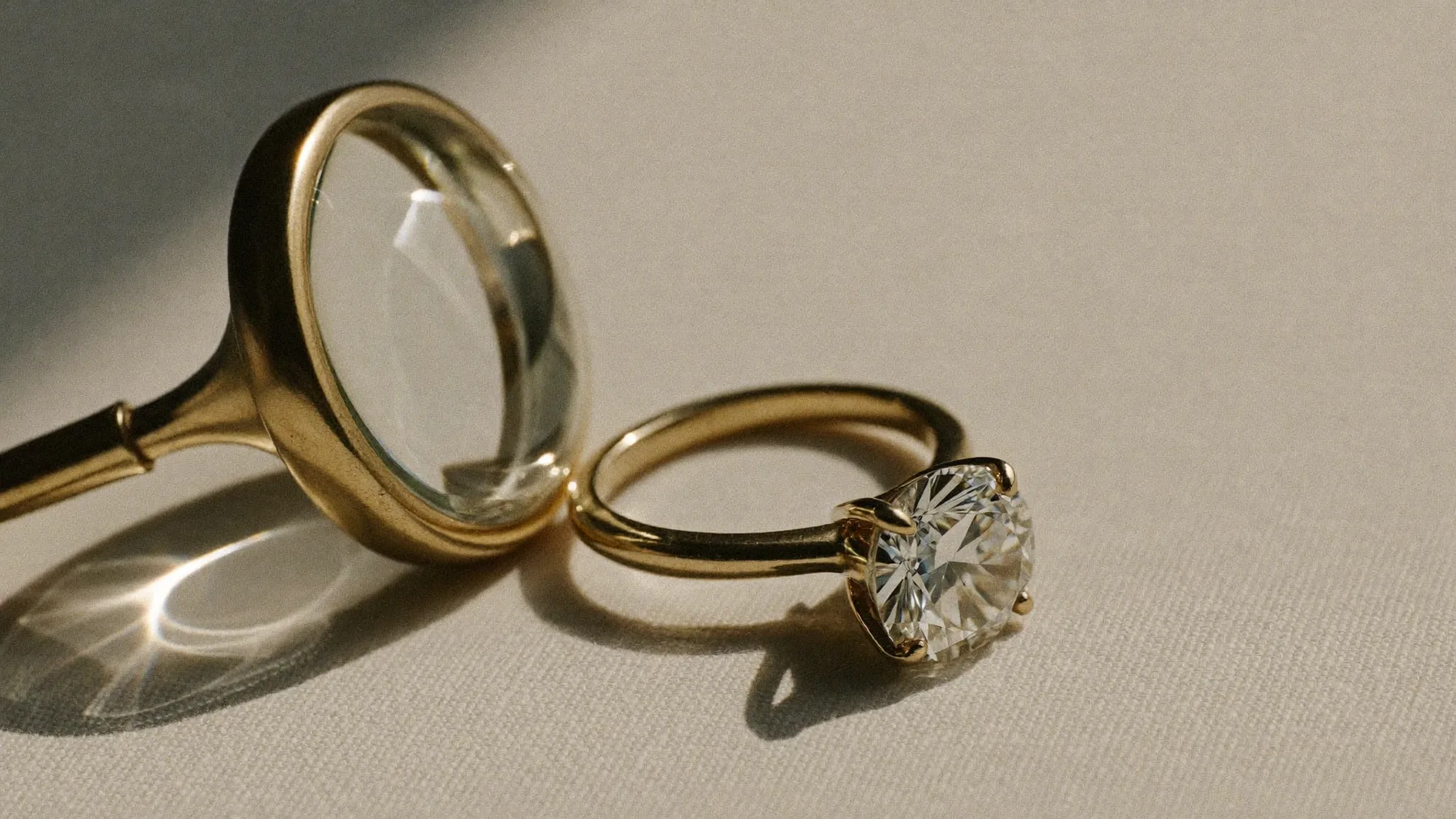
The magnification matters more than most buyers realise. GIA grades clarity under standard viewing conditions at 10x, which is roughly ten times closer than anyone will ever look at your ring. As GIA's own clarity grading explainer notes, at least two graders independently record their impressions before a grade is finalised, and the characteristics are plotted on a diagram matched to the stone's shape.
GIA puts the practical point plainly: "Many blemishes and inclusions are not visible to the naked eye." That single sentence is the whole argument for buying intelligently rather than buying the top of the chart.
VVS, VS and SI: The Grades That Matter
VVS, VS and SI are the three tiers where nearly every well made piece of diamond jewelry sits, and the visual difference between them at arm's length is usually nothing. The table below translates the official definitions into what you can expect to see without a loupe.
| Grade | What a grader sees at 10x | Visible without a loupe | Who it suits |
|---|---|---|---|
| FL / IF | No inclusions at all; IF may show minor surface blemishes | No | Collectors and buyers who want the certificate to say it |
| VVS1 / VVS2 | Minute inclusions, extremely difficult to very difficult to find | No | Large solitaires above two carats, step cuts |
| VS1 / VS2 | Minor inclusions, difficult to somewhat easy to locate | Almost never | Most engagement rings and solitaire pendants |
| SI1 / SI2 | Noticeable inclusions, easy to very easy to locate | Sometimes, depending on placement | Pave, halos, tennis bracelets, smaller accent stones |
| I1 / I2 / I3 | Obvious inclusions that can affect transparency and brilliance | Yes | Rarely worth it at any price |
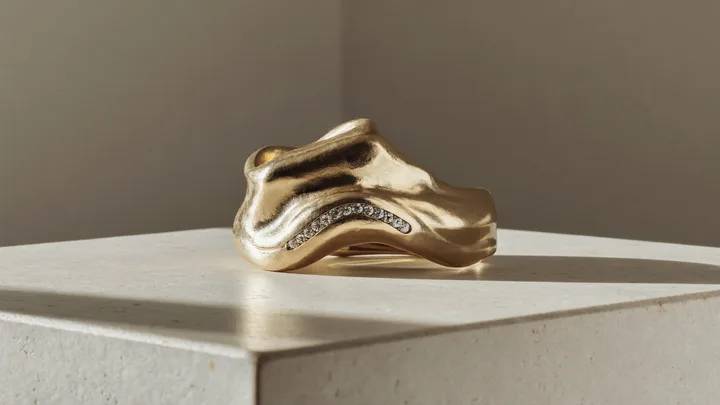
Setting style changes the answer. A single large stone sitting high in a solitaire mount, like the Oval Diamond Solitaire Pendant (from $2,000), gives an inclusion nowhere to hide, so VS is the sensible floor. A design that scatters light across many small diamonds, such as the Atelier Diamond Sculptural Ring (from $1,650), hides minor characteristics completely, and paying VVS prices there buys you a nicer document rather than a nicer ring.
Eye-Clean Is the Only Test That Counts
An eye-clean diamond is one with no inclusions visible to normal vision at roughly arm's length, and it is the standard that should drive your decision rather than the grade letter itself. Eye-clean is not a graded category on any report. It is an outcome, and it depends on three things the chart does not show you.
- Placement. A feather tucked under a prong is invisible. The same feather under the table of the stone is not.
- Contrast. A dark crystal reads far more easily than a white or transparent one at the identical grade.
- Cut and shape. Brilliant cuts such as round and pear scatter light and camouflage inclusions. Step cuts such as emerald and baguette have long open facets that show everything, which is why they are usually bought a grade or two higher.
This is why two SI1 diamonds on paper can look like different products in person. It is also why a reputable report is worth more than a reassuring adjective: the plotted diagram on an IGI report tells you where the characteristics sit, not just how many there are. If you have never read one closely, our guide to IGI certified diamonds and how to read the report walks through the plot line by line.
What Clarity Costs, and Where to Spend Instead
Moving from VS2 to VVS1 is usually the single least visible way to spend more money on a diamond. The gap buys you a rarer grading result and, in almost every mounted piece, an identical appearance. The better use of the same budget is carat weight, cut quality, or a heavier karat of gold that will survive daily wear.
Timing is unusually favourable at the moment. Diamond analyst Edahn Golan reported that lab grown wholesale prices fell 13% year over year in the second quarter of 2026, as covered by JCK, with the steepest falls in two carat goods. Golan's reading is that demand has shifted upward as larger stones became affordable rather than collapsing. In practice, the same budget that bought a cautious half carat two years ago now reaches a larger, better cut stone at a clarity grade nobody will ever question.
The counterweight is metal. The World Gold Council put the average gold price at US$4,262 an ounce in the third quarter of 2026, which is why the karat you choose now moves the final price more than a clarity grade does. Ten karat gold keeps a design within reach; eighteen karat buys warmth and weight.
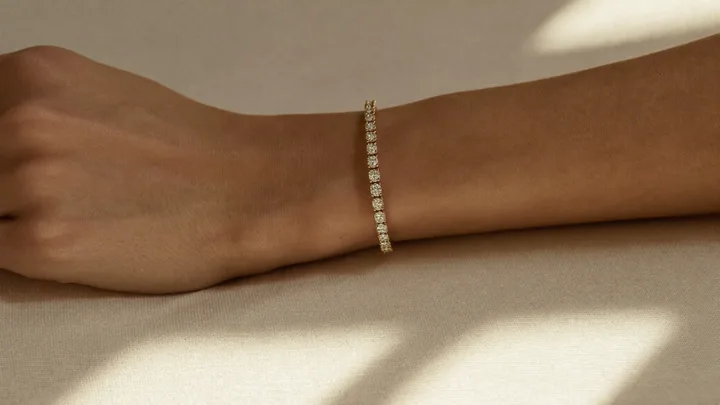
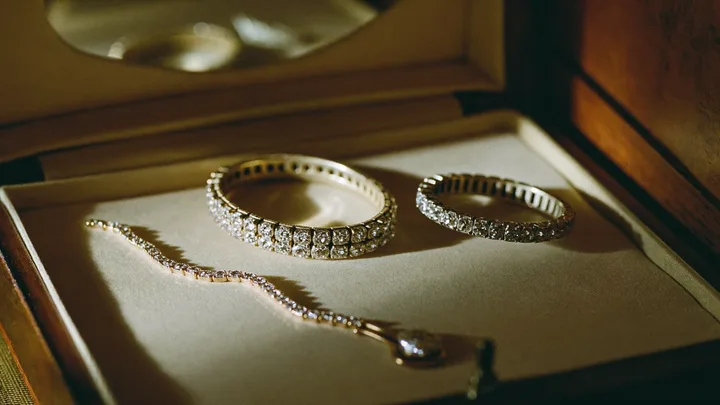
Where this lands in practice at Roomy's: the Arc Diamond Band Ring (from $600) sets five flush diamonds where minor characteristics are structurally invisible. The Opale Round Diamond Tennis Bracelet (from $550) spreads 0.63 total carat weight across many small round brilliants, the classic case for not overbuying clarity. And when a piece is built to be looked at closely, like the Gloire Round Diamond Tennis Bracelet (from $3,200) at 1.19 total carat weight, the grade earns its keep. Every stone is lab grown, IGI and Roomy's certified, and set in solid 10, 14 or 18kt gold.
Clarity is one axis of four. If you want the companion piece, our diamond color chart from D to Z covers the grade that tends to be more visible than clarity in yellow and rose gold settings. Cut is the grade that outranks both when budget forces a choice, and our guide to diamond cut grade, Excellent vs Ideal explains exactly how that top grade is awarded. And if you are shopping for a piece where clarity quietly stops mattering at all, our edit on huggie hoop earrings covers the everyday end of the collection.
Frequently Asked Questions
What is the best diamond clarity grade to buy?
How many grades are on the diamond clarity chart?
Is SI1 clarity eye clean?
Do lab grown diamonds have the same clarity grades?
Buy the stone, not the certificate
Every Roomy's diamond is lab grown, IGI and Roomy's certified, and hand set in solid 10, 14 or 18kt gold.
Shop the Collection