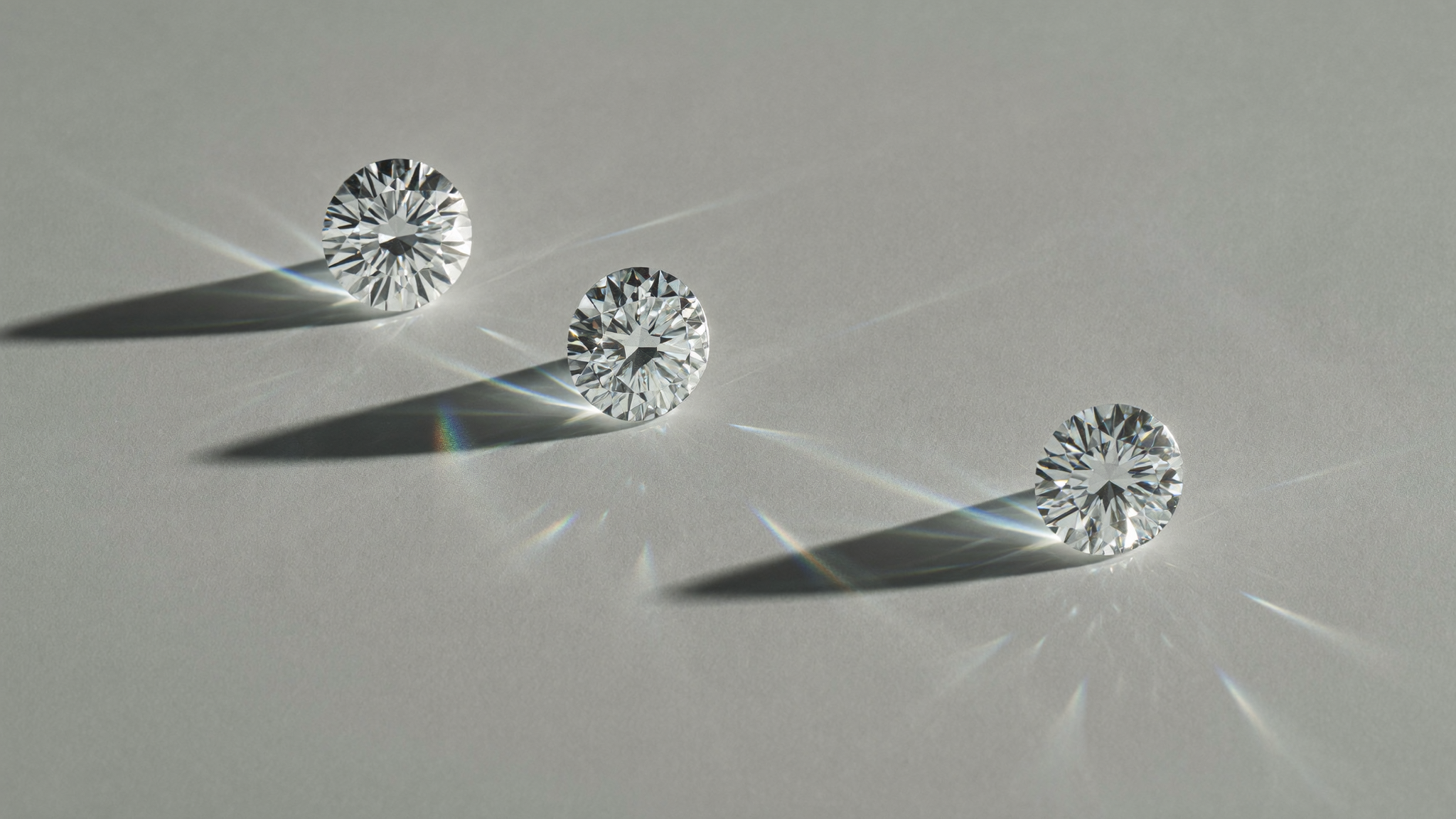
Diamond Color Chart: Reading D Through Z
Of the four Cs, color is the one most people buy blind. A diamond color chart looks like a tidy alphabet, D at the icy end and Z at the tinted one, and yet the distance between two neighboring letters is usually invisible on your hand and extremely visible on your invoice.
That gap is the whole opportunity. Learn what the letters actually describe, and you stop paying for a distinction nobody in the room will ever see. The scale itself is not a marketing invention: it is a laboratory instrument, built by the Gemological Institute of America, and the same D to Z letters appear on the IGI reports that accompany every lab-grown stone we set. Here is what each band means, how the grade is assigned, and where the money is genuinely worth spending.
What a Diamond Color Chart Actually Measures
A diamond color chart measures the absence of color, not the presence of it. Every letter from D to Z describes how little warm tint a colorless-range diamond holds, and a lower letter simply means less. GIA's own 4Cs reference puts the scale at 23 letter grades, beginning at D, which is the colorless extreme, and running to Z, where a faint yellow or brown is plainly readable. There is no A, B or C: the scale deliberately started at D in the 1950s so it could not be confused with the loose, inflated vocabulary the trade had been using before it.
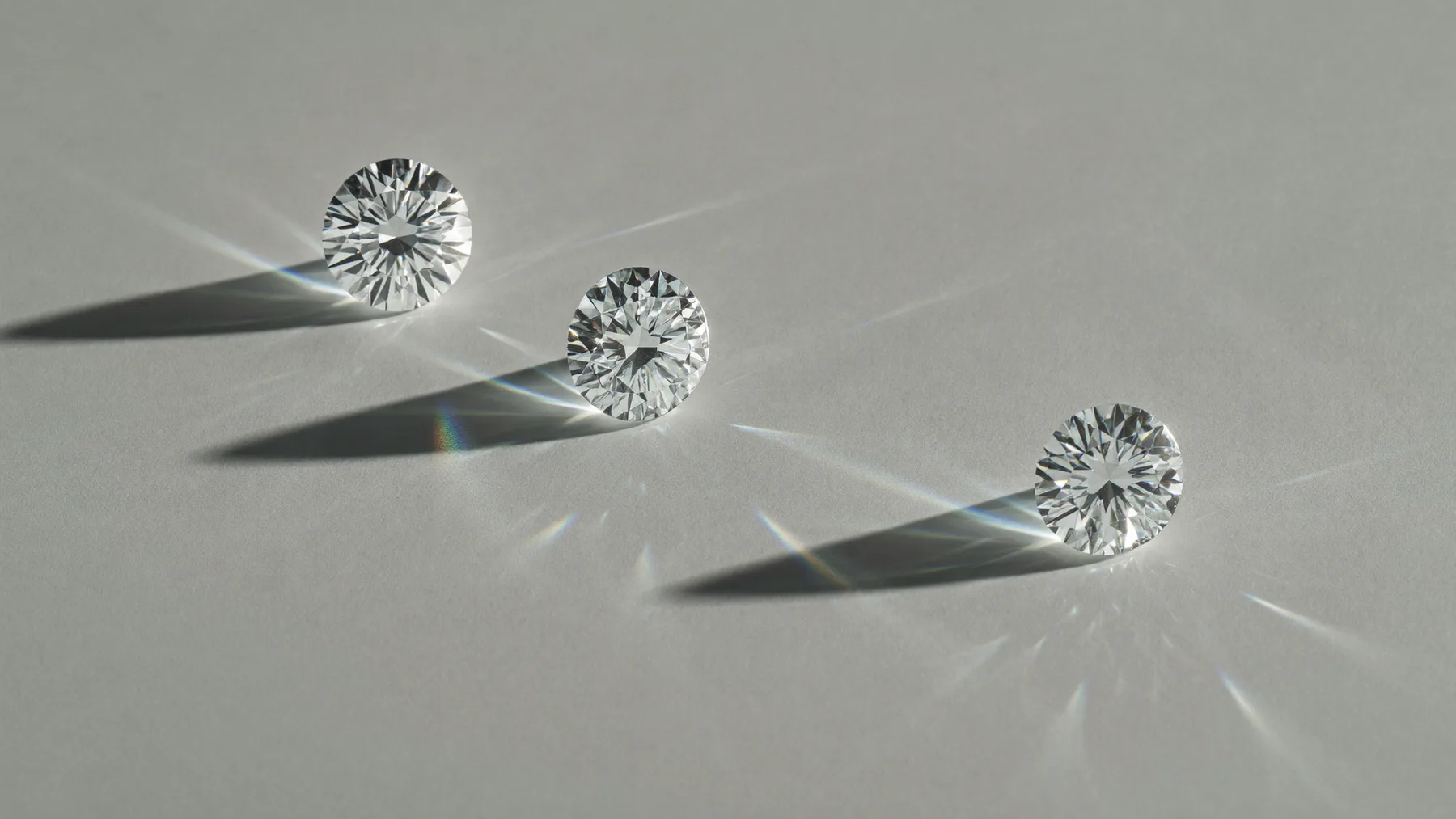
The important part is how small the steps are. As GIA states on that same page, "Many of these color distinctions are so subtle as to be invisible to the untrained eye. But these slight differences make a very big difference in diamond quality and price." That sentence is the entire buying strategy in two lines: the grades are real, the visual difference frequently is not, and the price responds to the grade rather than to what you can see.
Color is also shape-dependent. Step cuts such as emerald and Asscher hold their body color in long open flashes, so a tint shows sooner. Brilliant cuts chop returning light into hundreds of small sparks, which camouflages warmth. A G in a round brilliant and a G in an emerald cut are the same grade and a visibly different stone.
The Five Bands of the D to Z Scale
The 23 letters group into five named bands, and almost every buying decision happens inside the first two. GIA's guide to diamond color sets the bands out as follows, and this is the table worth screenshotting before you shop.
| Band | Grades | What you actually see | Best used for |
|---|---|---|---|
| Colorless | D, E, F | No detectable tint, even against a white card. The rarest band. | Solitaires in platinum or white gold, where nothing hides the stone |
| Near colorless | G, H, I, J | GIA describes the tint here as usually unnoticeable except to trained graders. | The value band. Most engagement and anniversary pieces |
| Faint | K, L, M | Warmth is present but, per GIA, still hard for an untrained eye to read. | Yellow gold settings, antique-style designs, larger carat on a budget |
| Very light | N to R | Subtle color becomes visible to an untrained eye in larger stones. | Rarely specified for fine jewelry |
| Light | S to Z | Clear yellow or brown, but not saturated enough to be graded fancy. | Specialist and vintage contexts only |
Three things shift where a given grade lands on that spectrum, and all three are within your control:
- Carat weight. Body color accumulates with depth. A J reads clean at 0.50ct and can read warm at 2.00ct.
- Metal. A white metal emphasizes the absence of color, which is why GIA notes that platinum and white gold make colorless and near-colorless stones look more colorless. Yellow gold does the reverse and lends warmth to a lower grade.
- Setting density. Pave and channel work surround a center stone with dozens of small diamonds, and small stones barely register body color at all.
How Diamond Color Grades Are Actually Assigned
A color grade is a consensus opinion, not a machine reading. GIA's published laboratory protocol for color grading D to Z diamonds requires at least two or three independent grader opinions on every stone, with agreement before a letter is issued. Round brilliants are observed table-down through the pavilion, without magnification, in a neutral gray viewing box lit at 5500 to 6500 K, against a set of master stones that sit at the least-colored boundary of each grade.
That paper is also unusually candid about the limits of human vision. "It is common for untrained observers to see no difference between two or three adjacent masters," GIA's laboratory team writes, noting that even skilled graders reach a visual tolerance of slightly less than one fifth of a grade at best. Meanwhile the same document records the commercial reality: for a one-carat VS1 round brilliant, the price gap between G and H was roughly 16% on both the Idex and Rapaport lists. One invisible step, one sixth of the budget. If you want to train your own eye before committing, GIA's interactive color comparison is the cleanest free tool for it.
Which Color Grade to Buy for Your Metal
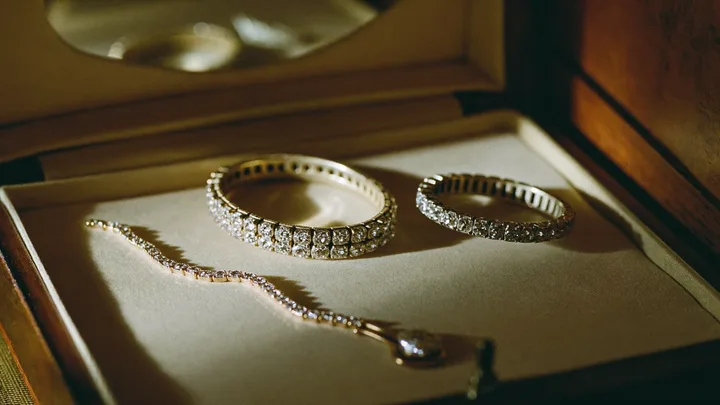
Match the color grade to the metal and the setting, and you can drop two letters without losing a thing. In yellow gold, warmth from the mounting reflects into the stone, so a G and a J converge quickly: the Marquise Eternity Diamond Band (from $1,900) and the Prism Emerald Eternity Band (from $1,050) both carry their diamonds in a continuous line of gold, and near-colorless grades sit beautifully in them.
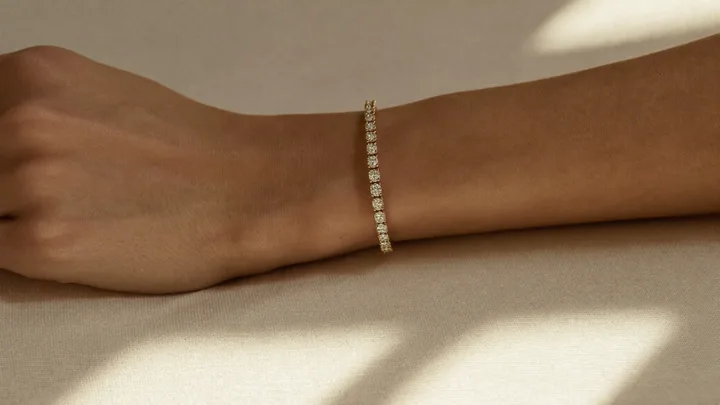
Pieces built from many small stones are even more forgiving. The Céleste Round Diamond Tennis Bracelet (from $1,700) and the Infinity Diamond Pavé Ring (from $850) read as one continuous sheet of light, and no one perceives a letter grade in a 1.5mm stone. The same logic applies to the Emerald Ribbon Diamond Stud Earrings (from $500), which sit beside the face rather than under direct inspection.
Spend on color where a single stone carries the whole piece. A solitaire has nothing to hide behind, which is the one place a colorless or high near-colorless grade earns its premium: the Oval Diamond Solitaire Pendant (from $2,000) is exactly that kind of piece. Every stone we set is lab-grown and IGI certified, which means the color letter on your report was assigned under the same protocol described above. If you want to read the rest of that report properly, our guide to IGI certified diamonds walks through it line by line, and the companion piece on the diamond clarity chart covers the C that most often gets confused with this one. And if you are choosing a piece as a gift rather than grading one, our guide to meaningful jewelry gifts explains what each form actually says.
Frequently Asked Questions
What is the best diamond color grade to buy?
Can you see the difference between a G and an H color diamond?
Does diamond color matter more in yellow gold or white gold?
Do lab grown diamonds use the same D to Z color scale?
Buy the grade you can see
Every Roomy's piece is set with lab-grown, IGI certified diamonds in solid 10, 14 and 18kt gold, with the color grade stated on paper.
Shop the Collection