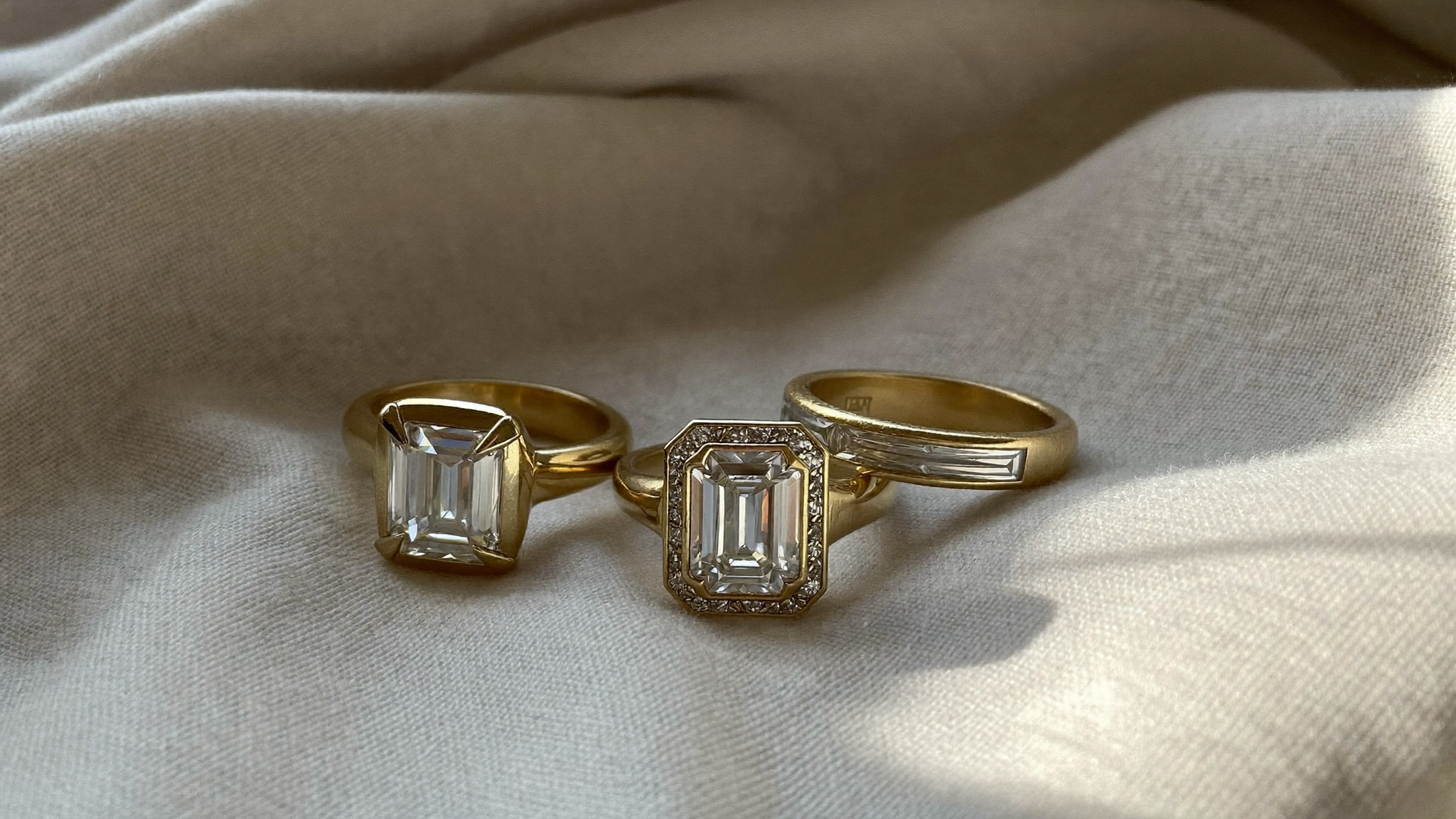
Diamond Ring Settings, Decoded
Diamond ring settings are having a quiet reckoning. The solitaire perched on six tall prongs, the default for three generations, is losing ground to low bezels, flush channels and pavé that sits close to the finger. The reason is not fashion alone. It is that far more people now wear a diamond every single day.
That shift is visible in the data. According to JCK's reporting on The Knot's 2026 Real Weddings Study, lab-grown center stones now account for 61 percent of engagement ring purchases, a 239 percent jump since 2020, and the average center stone has grown to 1.9 carats. Bigger stones worn more often put real mechanical pressure on the metal holding them. The setting stopped being a styling footnote and became the part of the ring that decides whether it survives a decade of actual life.
What a Diamond Ring Setting Actually Is
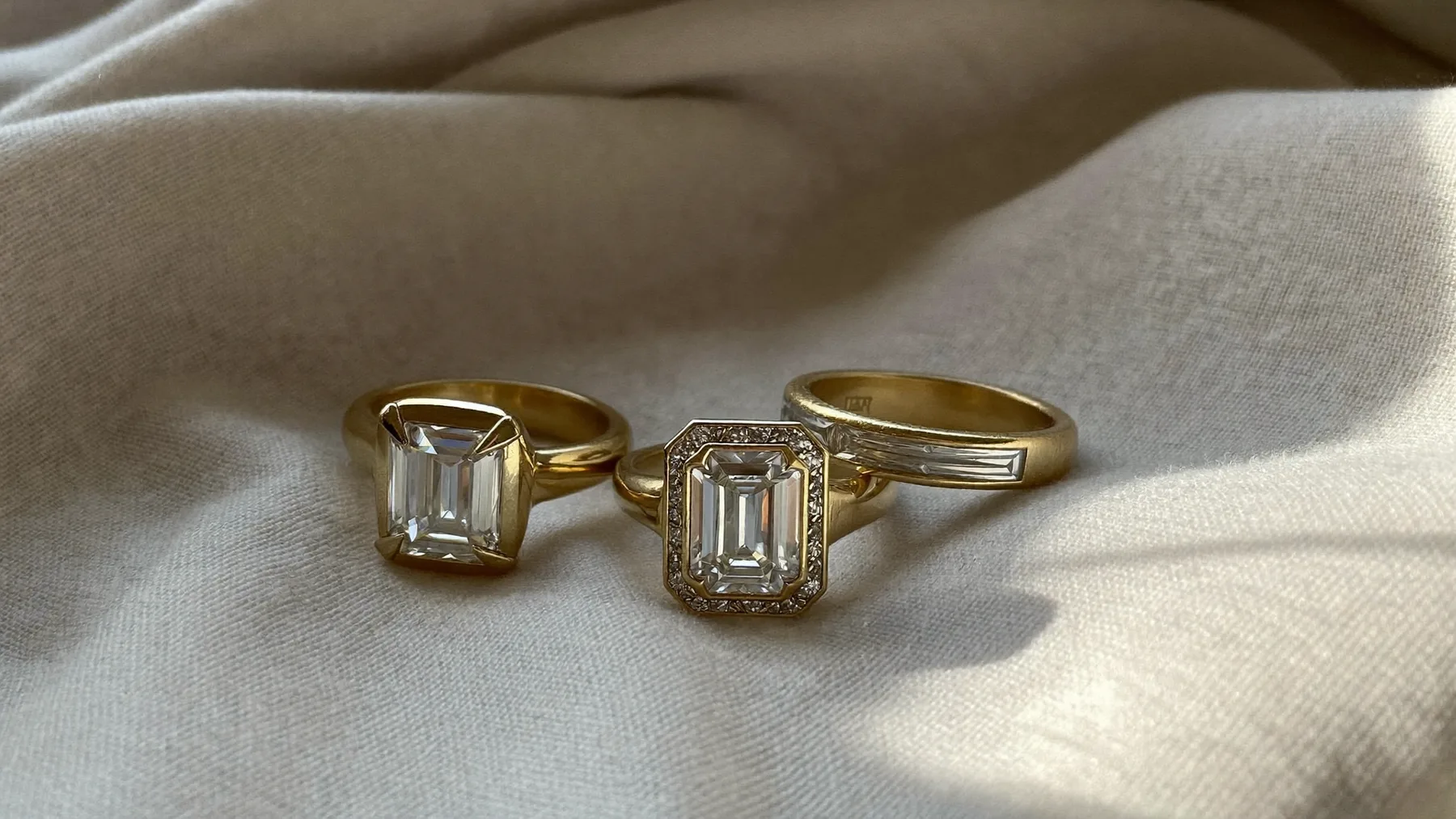
A diamond ring setting is the metalwork that physically grips a stone, and it is a different thing from a setting style. GIA draws the line clearly in its guide to ring settings: the setting is the securing mechanism, while the style (solitaire, halo, three stone, cluster) describes how stones are arranged across the piece. You can have a bezel solitaire or a prong halo. They are separate decisions, and conflating them is the most common reason a ring arrives looking nothing like the picture in someone's head.
Three pieces of vocabulary make every product page readable:
- Head. The structure that cradles the center stone. Prongs, bezels and baskets all live here.
- Shoulders. The section where the band widens as it approaches the head. This is where pavé and channel work usually sits.
- Shank. The band itself. Its width and thickness determine whether a flush setting is even possible, and how easily the ring can be resized later.
The Five Diamond Ring Settings Worth Knowing
Five securing mechanisms cover almost every fine ring sold in 2026: prong, bezel, channel, bar and flush. Each one trades a measurable amount of light for a measurable amount of protection, and knowing the exchange rate is the whole skill.
| Setting | How it holds the stone | Best for | The honest tradeoff |
|---|---|---|---|
| Prong | Three to six metal claws fold over the girdle | Maximum light return, larger center stones | Prongs snag on knitwear and need re-tipping over time |
| Bezel | A continuous metal rim wraps the stone's edge | Daily wear, hospital and gym shifts, active hands | The rim covers the girdle, so the stone can read slightly smaller |
| Channel | Stones sit between two parallel metal walls | Eternity and anniversary bands | Harder to resize, and the channel traps lotion and dust |
| Bar | Vertical metal bars separate each stone | Architectural bands with visible rhythm | More exposed edges than a channel of the same width |
| Flush | The stone is sunk level with the band's surface | Stacking, men's bands, work with your hands | Needs a wide shank, and limits carat weight |
Pavé deserves a note of its own because it is usually described as a setting when it is really a style. Pavé means many small stones set close together so the metal between them nearly disappears. The stones themselves are typically held by tiny beads or micro-prongs, which is why a pavé shoulder needs a jeweller's loupe and a steady check every couple of years.
Bezel vs Prong Setting: Which Lasts Longer
A bezel setting protects a diamond better than a prong setting, because a continuous metal rim has no exposed claw to catch, bend or shear off. That durability is exactly why bezels moved from utilitarian to desirable. Jewellery historian Marion Fasel, speaking to National Jeweler about 2026 engagement ring trends, put the appeal plainly: "It feels modern compared to the classic silhouette of a solitaire."
Prongs have not lost the argument. A six-prong head lets light enter a diamond from more angles, which is why it still dominates for stones above two carats where brilliance is the point. The practical rule is about maintenance, not superiority. GIA notes that prongs need periodic re-tipping and stones need tightening, and that an ultrasonic cleaner can dislodge a stone that has already loosened. A bezel asks for far less of that attention. A prong asks for a check every twelve to eighteen months and rewards you with more fire.
What Diamond Ring Settings Cost at Roomy's
Every setting type below is available in Roomy's solid 10kt, 14kt and 18kt gold, with IGI certified lab-grown diamonds, and the price band is tighter than most people expect. Flush and channel work sits at the accessible end because the metal does more of the work; bezel and pavé cost more because the hand finishing is slower.
- Flush set. The Arc Diamond Band Ring (from $600) sinks its stones level with a softly waved shank, so nothing stands above the finger.
- Channel set. The Linear Diamond Half Eternity Band (from $700) runs its diamonds between two clean gold walls, which is the most protected way to wear a line of stones.
- Bar set. The Prism Diamond Band (from $800) separates each step cut stone with a vertical bar, giving the band a visible architectural beat.
- Pavé. The Infinity Diamond Pavé Ring (from $850) carries micro-set diamonds around a figure eight, where the metal almost vanishes between stones.
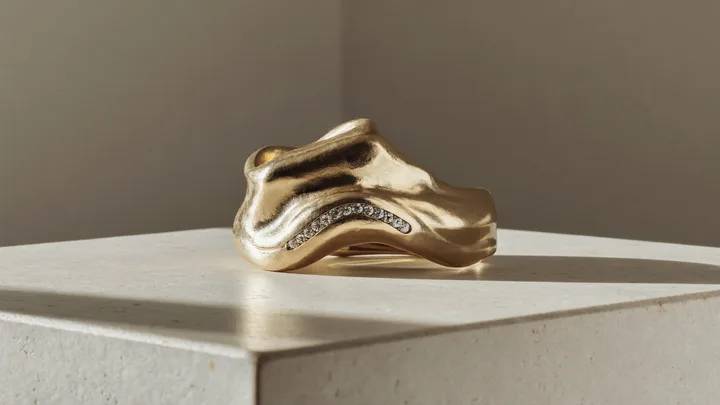
- Bezel, sculptural. The Reverie Diamond Sculptural Ring (from $1,050) uses a bezel as a design element rather than a safety measure, framing the stone in fluid gold.
- Bezel, full eternity. The Prism Emerald Eternity Band (from $1,050) rims every emerald cut stone individually, which is the most secure way to wear step cuts every day.
If you are weighing a full circle of stones against a partial one, our guide to full versus half eternity bands covers the resizing and comfort math in detail. For step cut stones specifically, the emerald cut edit explains why clarity matters more in an open table.
Choosing a Setting for How You Actually Live
The right diamond ring setting is determined by your hands, not by a trend forecast. Work backwards from the three hours a day you are least careful, rather than from the evening you imagine wearing it. A useful way to decide:
- Hands in and out of gloves, bags, keyboards. Bezel or flush. No claw means nothing to snag.
- You want the stone to look as large as it is. Prong. A bezel rim typically hides a fraction of a millimetre of the girdle.
- You stack two or three rings daily. Flush or channel, so the bands sit together without grinding each other.
- You want shoulder sparkle without a bigger centre stone. Pavé, and budget a professional check every two years.
- You expect to resize. Avoid full eternity, channel and tension work, all of which GIA flags as difficult or impossible to size cleanly.
Setting choice is also quietly a metal choice. White metal still takes 48 percent of engagement rings per National Jeweler's read of The Knot data, but yellow gold has more than doubled its share in five years, and a yellow bezel around a colourless stone reads warmer and more deliberate than the same stone in white. The 2026 appetite for geometry is real too: National Jeweler's coverage of the Pinterest 2026 trend report names "Neo Deco," a modern take on 1920s design, as one of the year's defining directions, which is precisely the territory bar and channel bands occupy. If you are drawn to the heavier end of that look, our bold gold edit covers the wide bands and sculptural silhouettes carrying it.
Frequently Asked Questions
Which diamond ring setting is the most secure?
Is a bezel setting more durable than a prong setting?
Can a pave or channel set ring be resized?
How much do diamond ring settings cost in 2026?
Find the setting your hands will actually live with
Every Roomy's ring is solid 10kt, 14kt or 18kt gold, set by hand with IGI certified lab-grown diamonds.
Shop the Collection